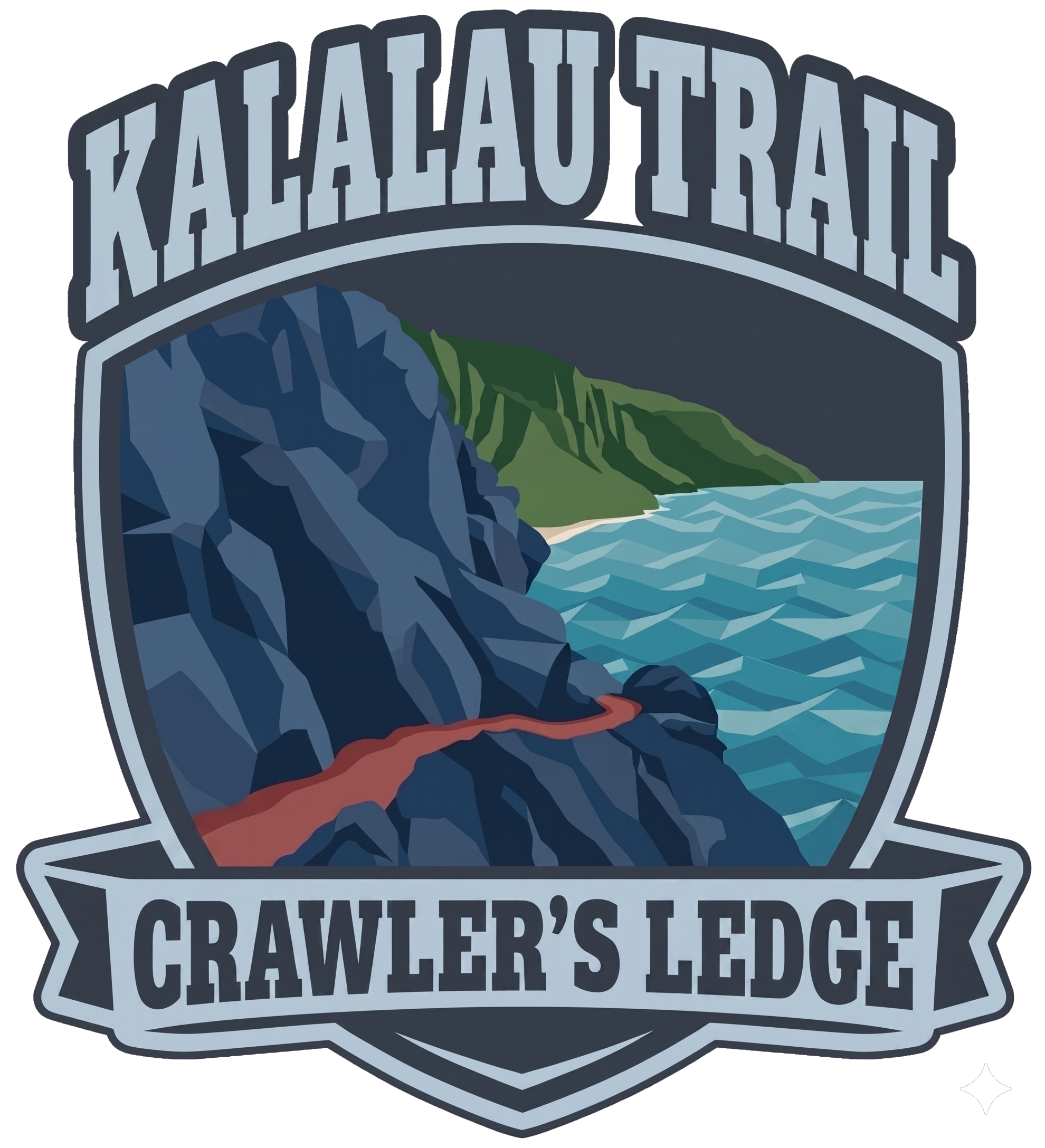
If you are planning to hike the legendary Na Pali Coast of Kauai, you already know its reputation. But nothing invokes raw anxiety quite like the mention of Kalalau Trail Mile 7—the exact point where the canopy disappears and you encounter Crawler’s Ledge.
Is the Crawler’s Ledge danger real, or is it just internet hyperbole? The truth lies somewhere in between—and knowing the difference is what keeps backpackers safe.
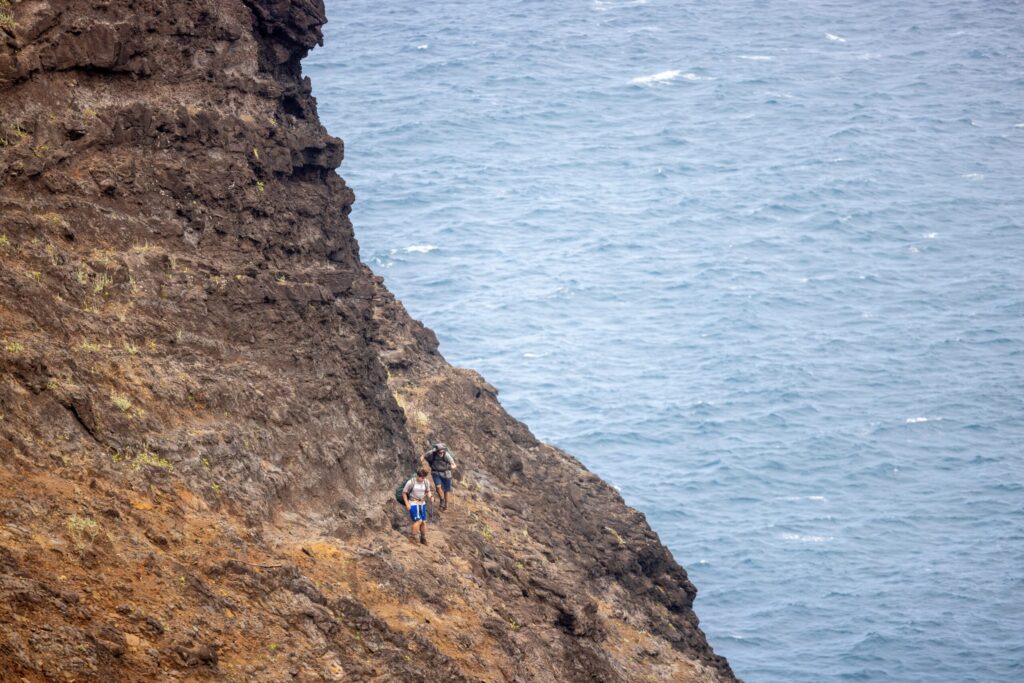
Hazards to be prepared for
The Mud Approach
The red dirt paths directly leading into and out of the ledge are made of heavy volcanic clay. The moment a tropical downpour hits, this terrain transforms into a grease-like mud that makes maintaining stable footing incredibly difficult.
Ocean Winds
Because Mile 7 is completely exposed to the open Pacific with zero tree canopy, sudden coastal wind gusts can sweep the cliffside. These winds can easily catch a large, top-heavy backpacking pack and compromise your center of gravity.
Trail Fatigue
Crawler’s Ledge appears right after you conquer the grueling, steep switchbacks of Hanakoa Valley.
Backpackers often reach this highly technical, mental hurdle when their legs are tired and their physical energy is at a low point in the day.
Critical Safety Rules for Kalalau Trail Mile 7
- Maintain Three Points of Contact: Use adjustable trekking poles to anchor yourself against the mountain wall.
- Stow Your Loose Gear: Tuck away loose hats or camera straps so sudden gusts don’t compromise your center of gravity.
- Practice Yield Etiquette: The path is too narrow to pass someone. Locate a wider rock pocket early and pull over completely for oncoming hikers.
- Never Attempt in heavy Rain: If a flash flood warning hits the North Shore, wait it out. No destination is worth a blind step on slick clay.
Planning Your Full Journey?
Crawler’s Ledge is just one heart-pounding piece of a much larger puzzle. Before you shoulder your pack, make sure you have your legal permits, up-to-date weather alerts, and standard wilderness gear in order.